


THE MODERN LIVING PEACE TRAIN™ · WATER / A CONNECTED FEATURE
What happens when too much arrives?
What nourishes a field can travel into water.
Something placed in one part of a system does not necessarily stay where we put it. Follow a useful input beyond the place it was meant to work.
Follow the movement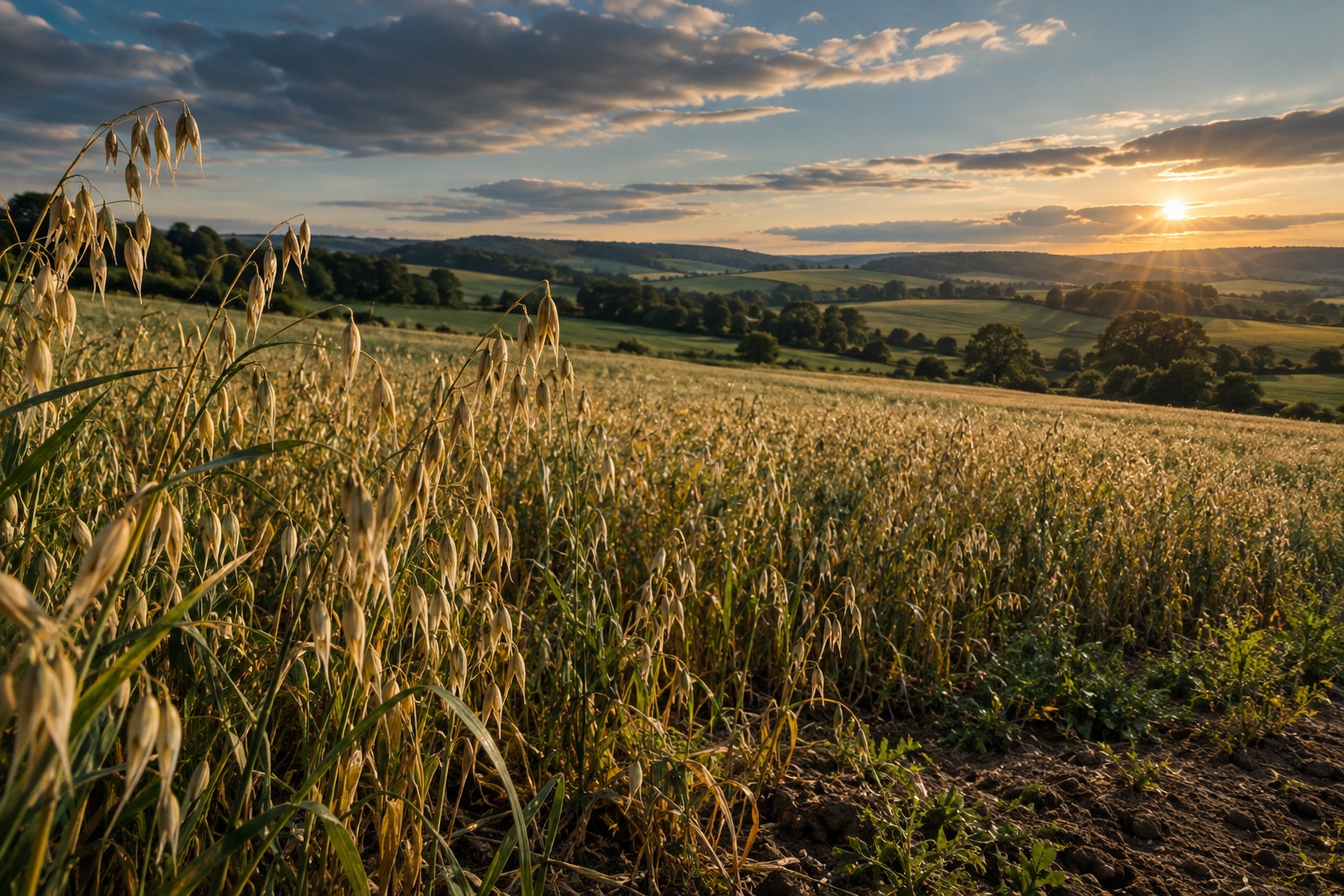
01 / THE SOURCE
The field needs what it can use.
Nitrogen and phosphorus are essential plant nutrients. In agriculture they may come from fertilizer, manure and other sources. They are not pollutants simply because they are applied to land.
The threshold changes with place and time. A crop’s demand, the amount applied, soil conditions and weather all affect whether an input can do its intended work. An excess available to move beyond the field creates a different question.
02 / FOLLOW THE WATER
The movement is the story.
This is a conceptual route, not a claim that every nutrient follows every path in every watershed.
- 01 · THE INPUT
A field needs nourishment.
Nitrogen and phosphorus support plant growth. The question is how much a crop can use, in this soil, at this time.
- 02 · THE THRESHOLD
Useful does not mean unlimited.
Rate, timing, soil conditions and weather affect what remains available to roots and what may move away.
- 03 · THE MOVEMENT
Water finds a route.
Rain and snowmelt can carry material across the surface. Some nutrients also move through soil or drainage toward water.
- 04 · THE ARRIVAL
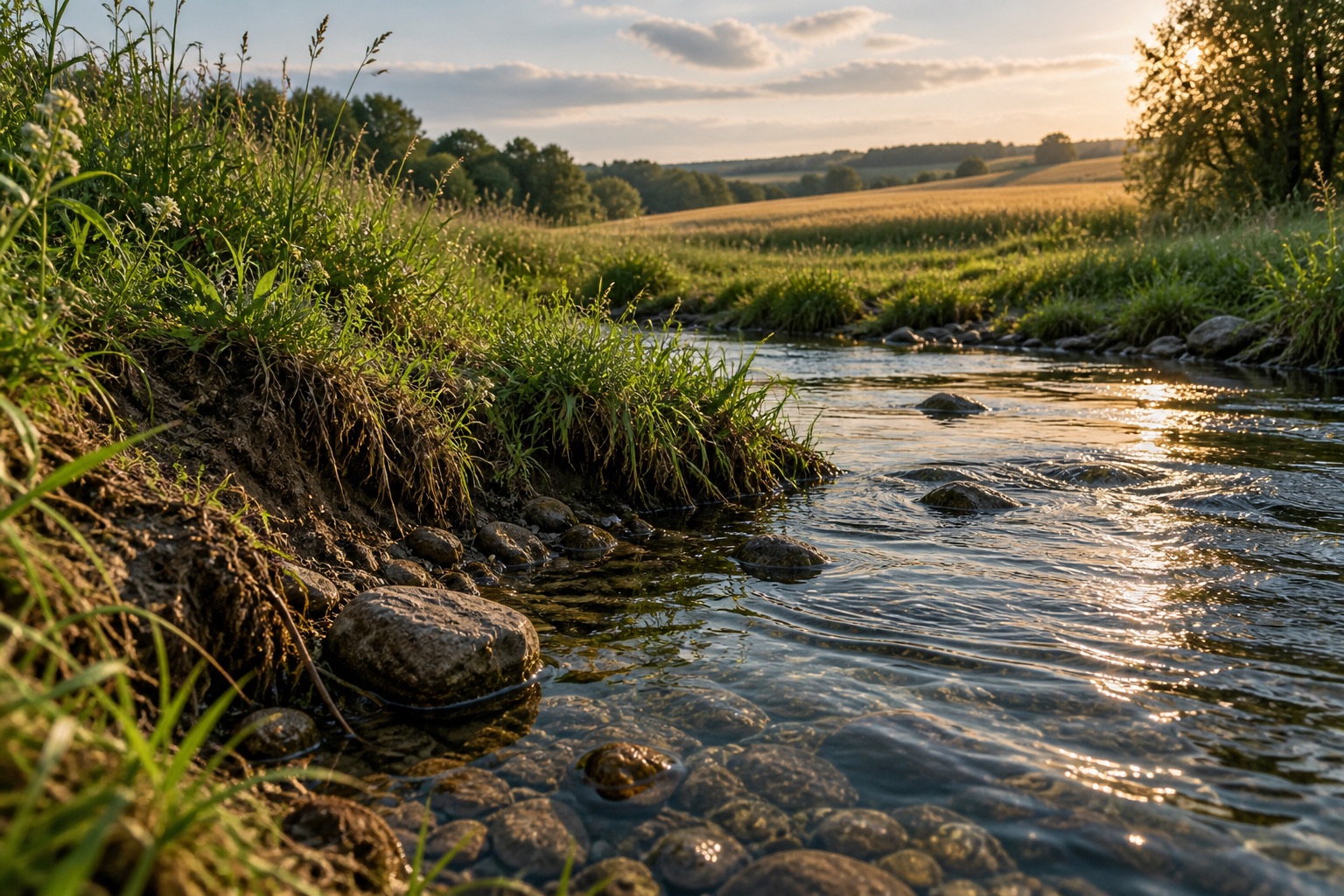
The stream is part of the field story.
Nutrients entering a stream can travel onward. Their effects depend on the receiving water and the conditions there.
- 05 · THE RETURN
Look upstream to understand downstream.
A water-quality question can lead back to the field edge, soil, crop uptake and management choices.
03 / AFTER ARRIVAL
More can change the water.
Extra nitrogen and phosphorus can stimulate algal growth. When the resulting organic matter dies and decomposes, dissolved oxygen may fall. Low oxygen can make water difficult for fish and other aquatic life.
Low oxygen describes a condition in the water. A harmful algal bloom is a bloom with harmful effects; some produce toxins. These outcomes can be related to excess nutrients, but one does not prove the other, and a photograph diagnoses neither.
04 / THE CONNECTION
One landscape. Several consequences.
Water links decisions on land with conditions farther away. It also brings the question back upstream.
Explore the Water railNutrients support growth; the aim is to make them available when crops can use them.
Surface runoff, erosion, movement through soil and drainage are different pathways. Their importance varies by site.
A stream reflects more than one field. Other land uses and sources can contribute nutrients too.
Timing, rate, soil cover, buffers and drainage practices are among the choices that can change losses. None is a universal fix.
THE TRACK CONTINUES · PASSENGER DISCOVERY
Follow what the water carries.
Follow the evidence beyond this public opening: what a crop could use, what the soil held, what water moved, and what the research can actually tell us. Nitrogen and phosphorus do not behave identically.
Continue the connected journey The research continuation opens with Passenger passage. This public story and its sources remain available to everyone.THE QUESTION CONTINUES
The water carries a story that began elsewhere.
Understanding where an input moves is part of understanding how everything connects. The next step is to follow the specific watershed, the measurements and the choices that shape it.
EVIDENCE & LIMITS
Look beneath the connection.
This feature explains established pathways and possible consequences. It does not identify the source of nutrients in a particular stream, assess a local bloom or replace a water test.
This is an introduction to nutrient pollution, not a local bloom alert or a nitrate test result. A full drinking-water nitrate and health evidence review is beyond this Track.
Scientific sources support the nutrient and water account. The landscapes are illustrative. Sources reviewed September 28, 2026.
Original framework · Throat / Blue Lace Agate
Original Chart, row 10 · original Master Workbook. Transcribed wording preserved; the original source image remains canonical.
- Organs
- Throat; Thyroid; Trachea; Neck/vertebrae; Mouth; Teeth & Gums; Esophagus; Hypothalamus.
- Emotional issues
- Choices; Self expression; Creativity; Addiction; Truthfulness; Faith; Judgment; Criticism.
- Physical issues
- Sore throat; mouth/gums/jaw; Scoliosis; Swollen glands; Thyroid.
Blue is The Modern Living’s discovery environment beside this original framework. The Fish and water Tracks are editorial expansion with independently sourced science. They do not establish a chakra effect, a thyroid treatment or an emotional cause of illness.
The original organ and condition entries remain preserved. This first Blue journey develops water, aquatic life and nourishment; it does not claim to complete every Throat subject.