

ISSUE 02 · OCTOBER 2026 · TOMORROW · A TMLPT INVESTIGATION
Intelligence
Is Not Wisdom.
We may build our most powerful problem-solving tools.
Who decides what problems they solve?
A journey through scientific possibility, human institutions and the distance between an answer and a benefit.
Begin with the world we can observe ↓
01 · THE ACHIEVEMENT IS REAL
First, take the capability seriously.
Inside a storm, an observation is hard-won information. Beyond it, a forecast must turn measurements into a possible future. That is a meaningful place to begin the AI question: with a scientific task whose result can be tested.
In a 2024 Nature paper, GenCast outperformed the European Centre for Medium-Range Weather Forecasts’ ensemble baseline on 97.2% of 1,320 evaluated targets. The system was trained on reanalysis data through 2018 and tested on 2019 weather. This is a retrospective comparison, not a claim of 97.2% accuracy for every storm or a head-to-head result against today’s forecasting systems.
The achievement is also collective. A model depends on observations, historical data and scientific work that came before it. Forecasts describe possible weather; a community still needs warnings it receives, a response it trusts and the means to act. Better prediction opens a door. It does not carry everyone through.
Read the original weather study ↗THE QUESTION CHANGES
If intelligence becomes abundant,
why might solutions remain scarce?
Not because intelligence is useless. Because access, incentives, institutions, politics, economics, distribution, trust and power can determine what an improved tool actually changes.
These are the investigation’s questions—not a claim that every problem has the same cause.
02 · KNOWLEDGE MUST ARRIVE
A breakthrough still needs a route to a person.
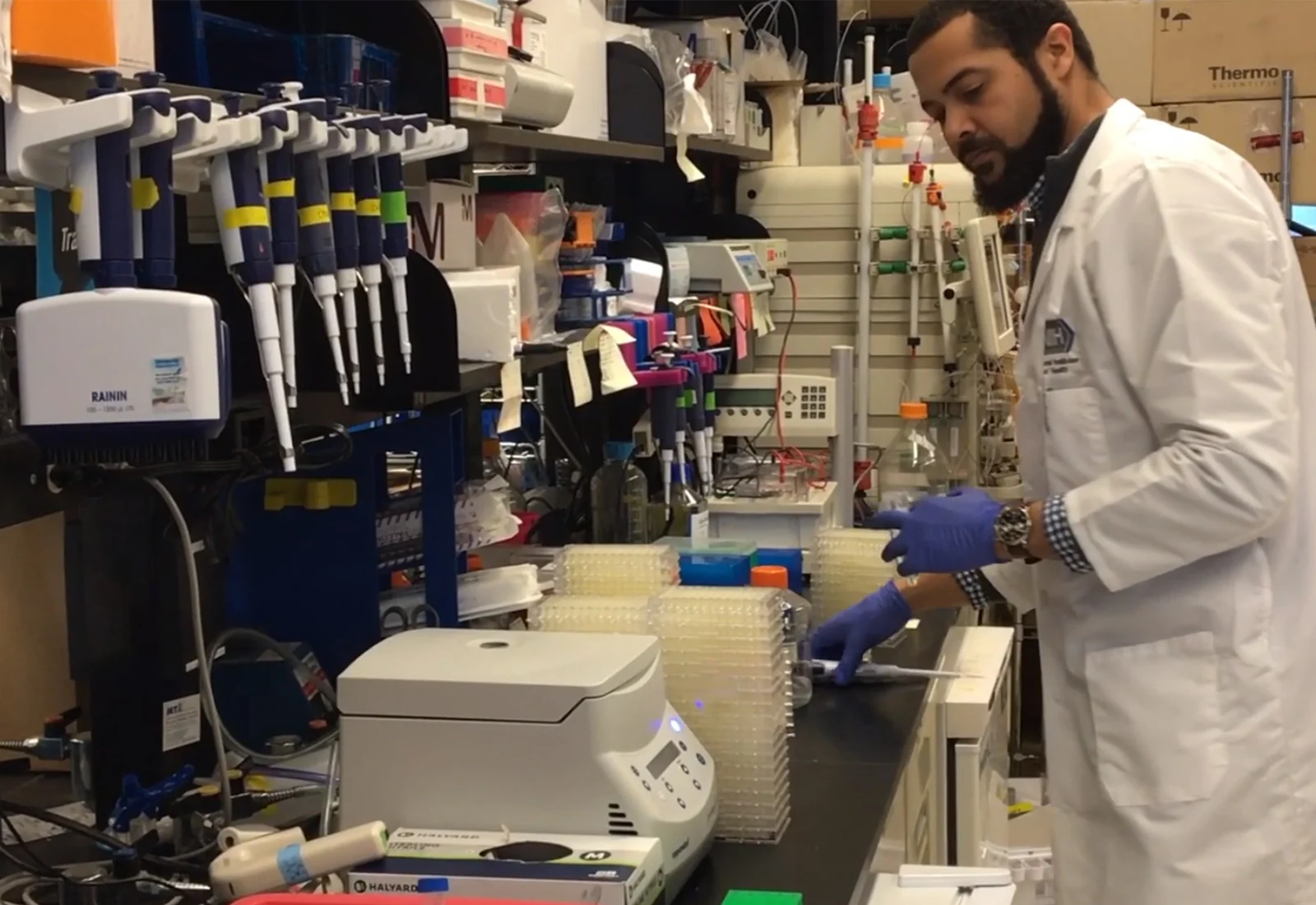
UNAIDS estimates that 78% of all people living with HIV were receiving treatment in 2025. Antiretroviral treatment and effective prevention exist. Yet knowing what can help is different from making it consistently available.
AI can support biomedical research. AlphaFold 3, for example, predicts biomolecular structures. Its benchmarks do not establish a new medicine’s clinical benefit. The path from a prediction to a product, and from a product to care, has more than one gate.
WHO’s recommendation of long-acting injectable prevention adds another possibility. Procurement, testing, staffing, affordability and trust remain delivery questions. The story cannot end with the invention.
Follow the HIV evidence ↗EVIDENCE ON THE TABLE · UNAIDS 2025 GLOBAL ESTIMATES
One population. Different stages of care.
Percent of all people living with HIV. These are estimated global coverage values; the source reports uncertainty intervals.
The three bars share a denominator. The 95% suppression figure sometimes reported refers to people on treatment, a different denominator. These measures do not tell us what one person’s access will be.
Source, definitions and uncertainty ↗EXPLORE THE BOTTLENECK · EDITORIAL SYNTHESIS
A smarter tool.
A different obstacle.
Choose a system. These relationships summarize the reporting; they are not estimates of AI’s effect or a ranking of problems.
Support discovery, planning and analysis.
A recommendation still needs funded services, dependable medicines, testing and care people can reach.
Does a gain in research capacity change treatment coverage?
Follow the evidence → UNAIDS · 2025 estimates03 · THE PHYSICAL MACHINE
The answer has an address.
An apparently weightless response depends on a physical system: equipment, electricity, cooling, networks and people. The IEA estimated global data-centre electricity use at 415 TWh in 2024 and projected around 945 TWh in its 2030 Base Case. Those totals cover all data centres, not AI alone; the future value is a conditional projection.
Efficiency matters. So do total demand, location and the infrastructure that serves a facility. The question is not whether computation has a footprint. It is which benefit justifies which cost, who measures it and who has a say.
Inspect the IEA outlook ↗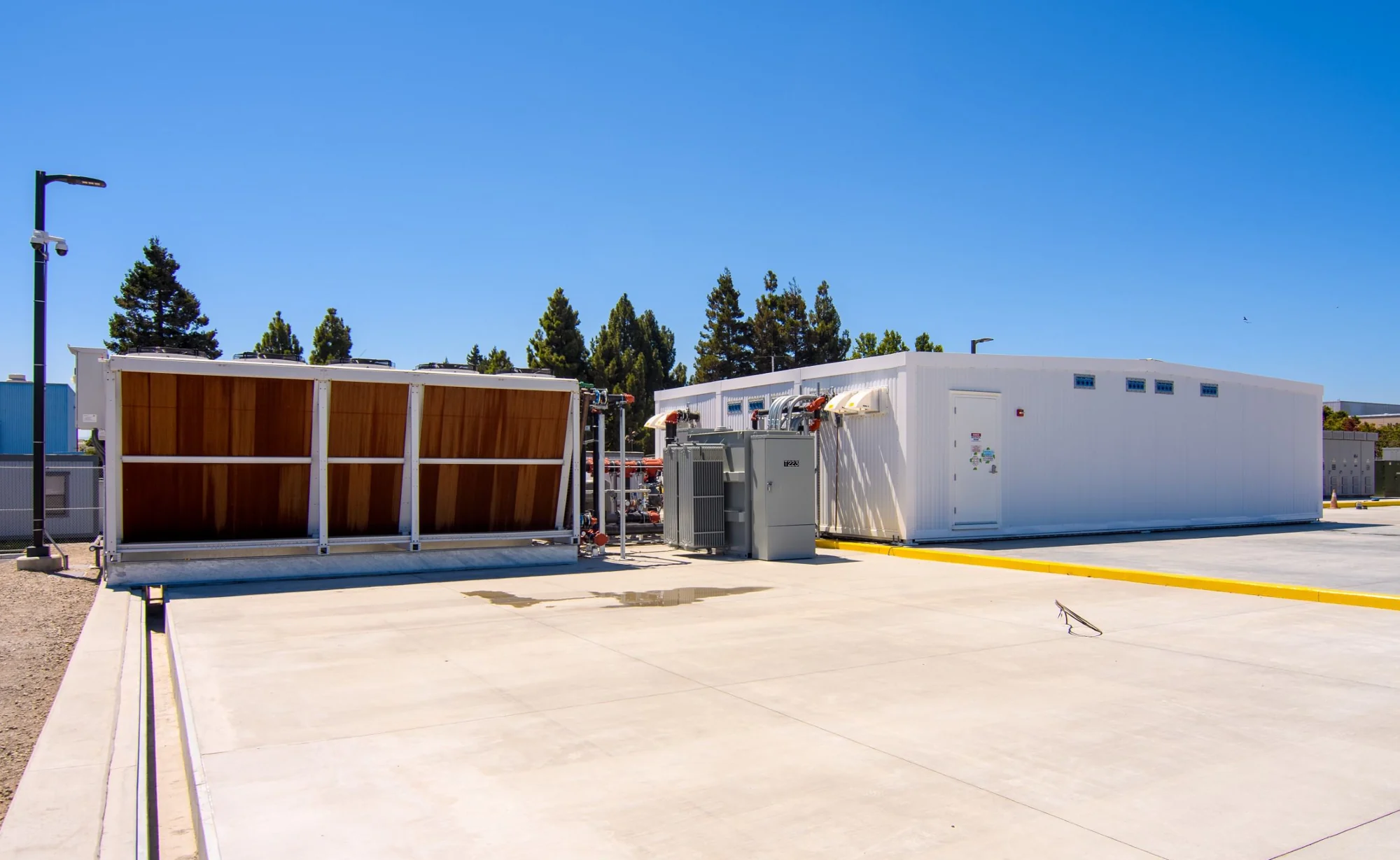
04 · CAPABILITY IS NOT AUTHORITY
Who sets the objective?
A system optimized for throughput may not be optimized for affordability. A model trained to predict a result does not decide whether that result is worth pursuing. In a clinic, a farm or a government office, the choice of objective is already a choice about people.
There are real counterarguments to a simple concentration story: shared research infrastructure, open models, cheaper ways to run some tasks and tools that widen participation. Access can improve. But an account, meaningful influence and the right to challenge a decision are different things.
Future superintelligence remains uncertain. Present decisions do not. Before handing a consequential task to a tool, ask who can inspect its work, contest its recommendation and stop the process. Wisdom in this investigation means those choices and responsibilities. It is an editorial distinction, not a scientific score.
THE STORY CONTINUES · PASSENGER
Follow the decision.
Then follow the consequence.
Eight substantial movements trace discovery and HIV delivery, clinical user testing, ownership and public compute, work and farming, electricity and water, nuclear governance, trust and uncertain futures.
Continue the full Passenger investigation →RESEARCH · SOURCES REVIEWED 3 OCTOBER 2026
Open the evidence.
Read the source record and study boundaries
- GenCast · probabilistic weather forecasting ↗
Nature · 4 December 2024 · retrospective benchmark; training through 2018, evaluation in 2019.
- UNAIDS · global HIV fact sheet ↗
2026 release · 2025 global estimates with uncertainty intervals; treatment and suppression have different denominators.
- WHO · long-acting HIV prevention ↗
14 July 2025 · public-health recommendation; prevention is not a cure or a guarantee of access.
- AlphaFold 3 · biomolecular interactions ↗
Nature · 8 May 2024 · structure-prediction benchmarks, not clinical outcomes.
- Medical assistants · randomized human-user study ↗
Nature Medicine · 9 February 2026, corrected April 2026 · 1,298 UK adults, ten simulated medical scenarios.
- Stanford · AI Index 2026 ↗
Annual synthesis · notable frontier models, not all models or all AI users.
- NSF · National AI Research Resource operations ↗
1 September 2026 · more than 800 supported research projects; access has conditions and support needs.
- NSF · researchers using shared resources ↗
Institutional reporting · Southern Oregon University and other documented users; no TMLPT interviews.
- ILO · occupational exposure index ↗
Working paper 140 · May 2025 · task-based exposure estimates, not observed job losses.
- IEA · energy demand from AI ↗
2025 outlook · all data centres; 2024 estimate and conditional 2030 Base Case.
- Berkeley Lab · 2025 data-centre update ↗
Published June 2026 · bottom-up US electricity model; 2030 scenarios, not measured future demand.
- SIPRI · AI–nuclear governance ↗
October 2025 · strategic-risk and governance analysis, not an experimental estimate of war probability.
- NIST · AI Risk Management Framework ↗
Voluntary risk-management framework released 2023; generative-AI profile 2024. Not a safety certification.
- International AI Safety Report 2026 ↗
3 February 2026 · expert scientific synthesis distinguishing demonstrated harms from uncertain future risks.
- FAO · automation in agriculture ↗
2022 technical study · ten case studies across sub-Saharan Africa, Latin America and Asia; not an Iowa AI trial.
Primary papers and official reports inform this investigation. Its questions and proposed accountability tests are TMLPT editorial analysis. No stakeholder interview or universal footprint estimate is implied.
Ask The Orange: who decides what AI solves? →