
THE MODERN LIVING · A SEVEN-RAIL INVESTIGATION
What are we growing
all this corn for?
Follow an Iowa acre. Through the harvest, the market, the animal, the river. Then ask what else that acre could become.
Begin with the land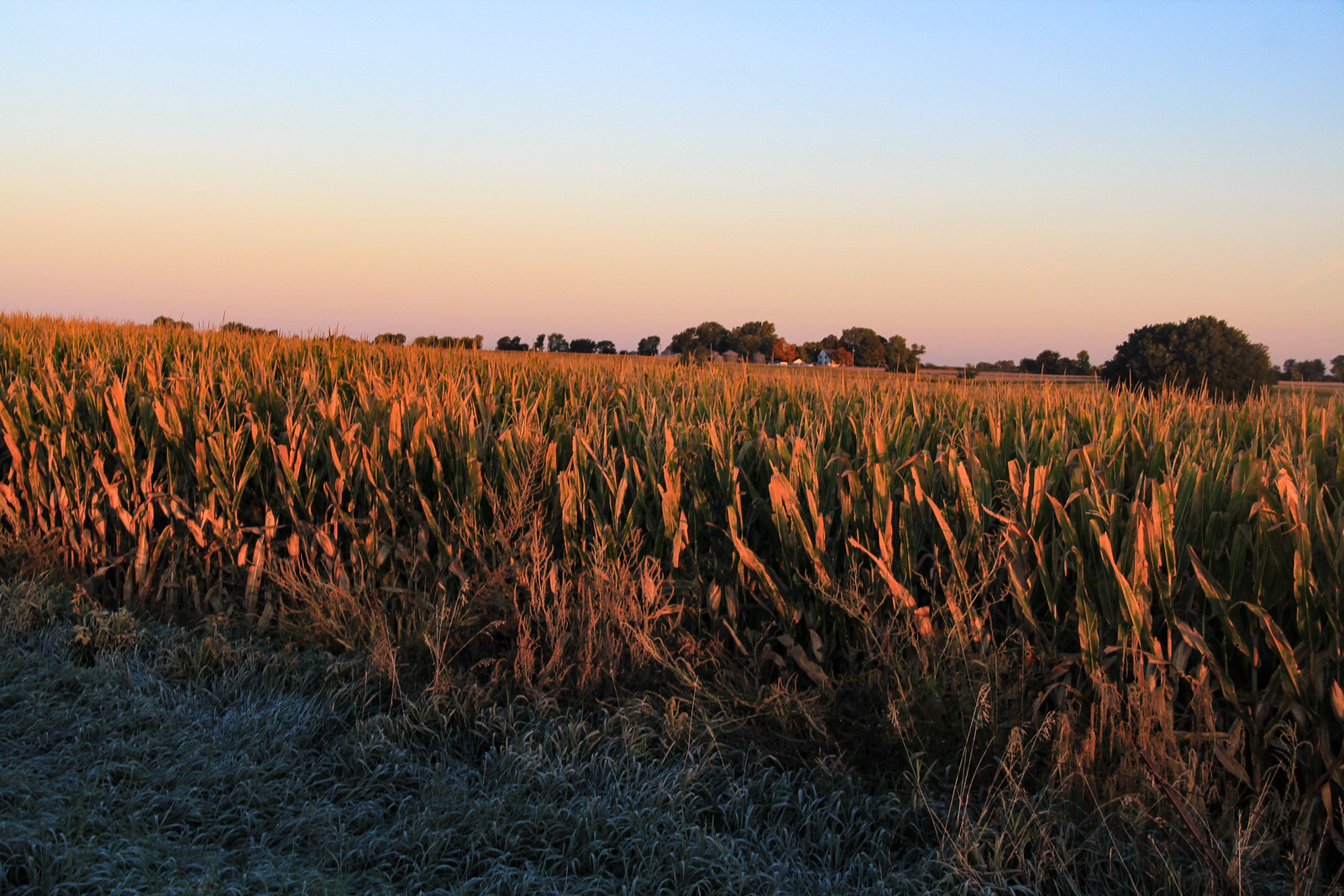
IOWA IS THE WINDOW. THE SYSTEM IS THE STORY.
Extraordinary productivity.
A narrower set of destinations.
Corn is a remarkable crop. Soybeans are, too. They support food, feed, fuel, trade and livelihoods. The question is what happens when so much productive land serves so few crop markets—and what becomes possible when farmers have more choices.
This is not an argument to stop growing corn or soybeans, or to stop raising or eating livestock. It is an investigation of diversification, proportion and resilience.
We begin in Iowa because the scale makes the system visible. USDA estimates for the 2025 harvest put corn for grain at 13.2 million acres and soybeans at 9.38 million acres. Together: 22.58 million harvested acres. That is approximately 63% of Iowa’s land area—a comparison of harvested crop acres with land area, not a measure of all farmland or a land-parcel map. [1] [2]
- 37% Corn for grain
- 26% Soybeans
- 37% All remaining land area
Rounded shares. Calculation: (13.2m + 9.38m) ÷ (55,853.42 square miles × 640 acres). “Remaining” includes other crops, pasture, woodland, settlements and other land uses. Sources: USDA NASS and U.S. Census Bureau. [1–2]
The landscape is efficient at producing grain. Whether it is equally resilient at producing livelihoods, clean water and a varied diet is a different question. A farmer cannot answer it alone. Buyers, lenders, insurers, processors, public policy and the rest of us are already in the field.
FOLLOW THE HARVEST · A ROUTE MAP, NOT A PERCENTAGE CHART
The bushel branches.
Corn
FIELD → GRAIN SYSTEM
- FeedCattle, hogs, poultry and other animals
- EthanolFuel, with feed coproducts returning to the ration
- ProcessingStarch, sweeteners, oil, grain foods and industrial uses
- ExportsOverseas buyers; destination is not final use
Soy
FIELD → CRUSH OR EXPORT
- MealA protein-rich feed ingredient
- OilFood and industrial uses, including biomass-based diesel
- Whole beansExport, seed and food uses; exported beans can be crushed abroad
U.S. sector pathways. A coproduct connects branches; it is not another harvest. Export and end-use totals cannot be added as though every bushel appears just once in both. [3] [4]
SEVEN RAILS. ONE CONTINUOUS INVESTIGATION.
Follow what connects.
The opening is public. Seven sourced chapters continue with Passenger passage. Start with water or enter the question closest to you.
- 01 · WATERPassenger
The field does not end at the fence.
Follow the rain from useful nutrients to rivers, drinking water and the Gulf.
- 02 · SOILPassenger
Two crops. An extraordinary amount of land.
Read Iowa’s acreage beside field evidence for longer rotations.
- 03 · FOODPassenger
A harvest is not yet a meal.
Follow grain into feed, fuel, ingredients and the food on a plate.
- 04 · HEALTHPassenger
The replacement is part of the answer.
Separate a crop from a product, and a dietary pattern from a promise.
- 05 · PEOPLEPassenger
Who can afford to change?
Follow a farm budget into public support, livelihoods and the costs outside the invoice.
- 06 · PLANETPassenger
One field. A world of buyers.
Follow trade, climate and land without pretending every shipment has a known final plate.
- 07 · TOMORROWPassenger
Keep the corn. Add more possibility.
Put buyers, processing, rotations, habitat and transition risk in the same plan.
THE QUESTION WAITING IN TOMORROW
What would make
more choices possible?
A longer rotation needs a buyer. Vegetables need labor and a cold chain. Livestock needs feed, care and a manure plan. Cleaner water needs practices matched to the actual route water takes. Tomorrow begins when these are designed together.
The HEALTH chapter includes an explicitly hypothetical 50% reduction in U.S. beef consumption. It shows why the replacement diet and the response of markets matter. It does not promise a 50% reduction in agricultural land, emissions or pollution.
Related journey: Where does it go?The evidence beneath this opening
Reviewed September 29, 2026. National uses are labeled U.S.; Iowa acreage is labeled Iowa. The chapters distinguish reported statistics, field studies, economic budgets, editorial interpretation and scenarios. Each chapter carries its own sources and limitations.
- USDA NASS · 2025 Iowa agriculture overview · Statistical estimates; harvested acres.
- U.S. Census Bureau · Iowa land area, 2020 · Denominator: 55,853.42 square miles.
- USDA ERS · Feed grains sector · U.S. use categories, not Iowa shipment tracking.
- USDA ERS · Oil crops sector · Distinguishes beans, meal and oil.