


The Modern Living Kitchen · Food Rail
What happens to the other half of the cabbage?
Tonight, a tangle of lime-dressed leaves on a warm tortilla. Tomorrow, ginger sizzling in a skillet. Both dinners begin at the same cutting board.
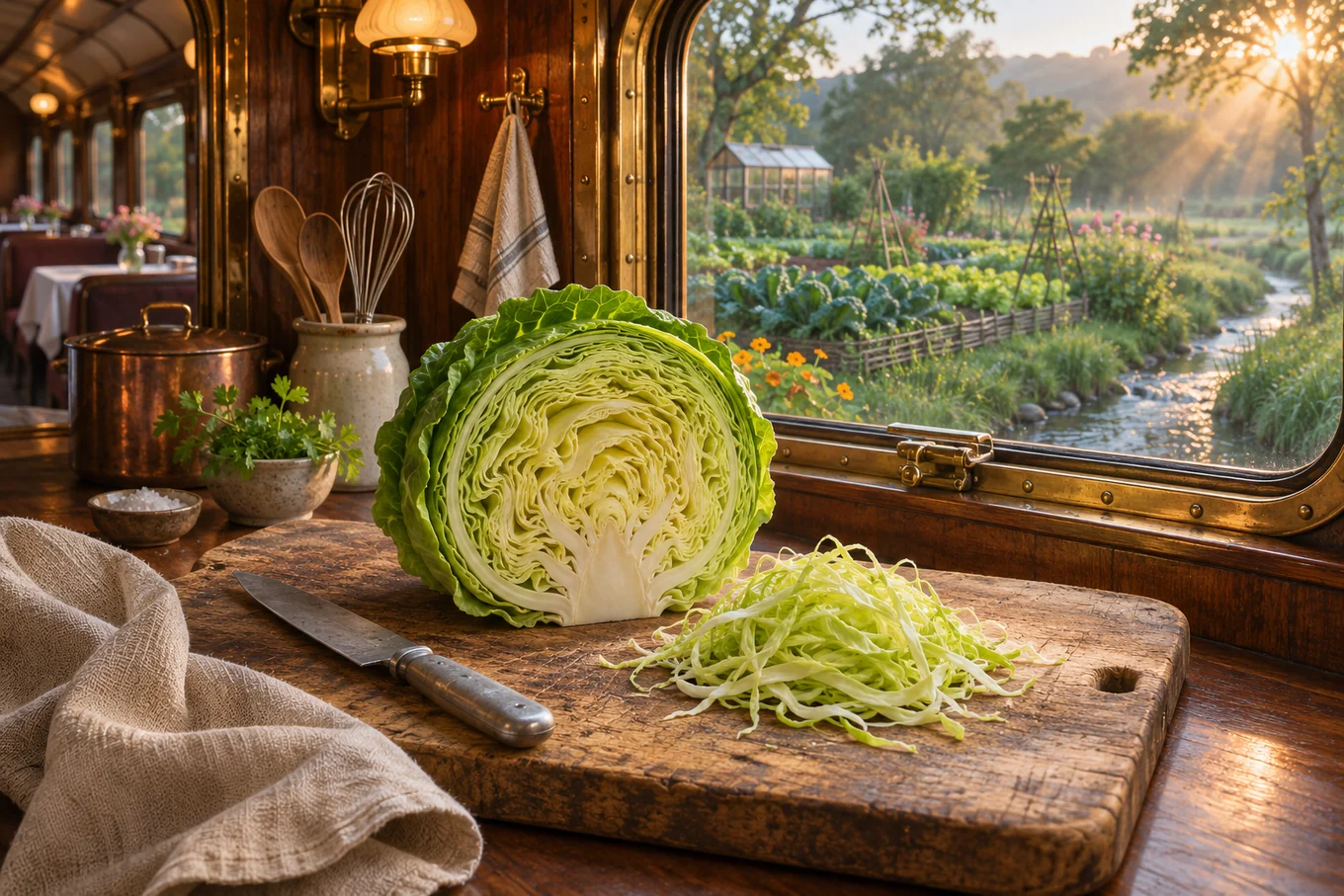
At the cutting board
Leave some leaves for tomorrow.
A taco needs surprisingly little cabbage. The Kitchen recipe calls for two cups of shreds for eight tacos. Cut what you need from one wedge and dress just those ribbons with lime and salt. Mash a spoonful of the cumin-scented black beans against the side of the pan so the filling will sit on a tortilla without rolling away.
Cook the black bean and cabbage tacosGive the next wedge a different job.
For the ginger skillet, the cabbage goes into the pan after the tofu has browned. Pat the tofu dry first. Once its edges take on color, add the sliced cabbage, ginger and a splash of water. A lid catches the steam and softens the thicker ribs. The recipe uses four cups of sliced cabbage, so check the size of your remaining wedge.
Cook the ginger cabbage and tofu skilletHave an apple instead? The Dining Car pairs browned cabbage with crisp apple matchsticks and caraway. Skillet Cabbage with Apple & Caraway · Passenger recipe
At the market · U.S. advertised prices
83¢ per pound
Round green cabbage · week ending November 13, 2026
USDA weekly grocery report, page 8 (PDF)What did the other half cost?
USDA recorded a weighted average of 83 cents a pound across 2,480 advertised offers. At that price a two-pound head would cost $1.66. The actual weight and your store’s price decide the receipt. The beans, tortillas and other ingredients have their own prices.
In 2025, EPA estimated that edible food bought and left uneaten cost $728 per U.S. consumer per year, counting food at home and away. That figure includes food left on plates as well as food lost to spoilage. A second dinner is a practical use for this particular wedge. Its value depends on what you would otherwise have bought. Read EPA’s national estimate (PDF).
What would eight tacos cost?
About $3.38 in groceries for the batch, or 84¢ for two tacos. Starting with an empty cupboard, the whole grocery packages and produce would come to about $9.16 before tax. You would still have 22 tortillas, most of the cabbage, and nearly all the cumin and salt.
For this example, we used U.S. Walmart listings reviewed on November 28, 2026. Shelf prices vary by place and week. The recipe also uses half a cup of tap water. The estimate excludes utilities, tax and delivery.
- Two 15-ounce cans of black beans at 92¢ each contribute $1.84. Eight tortillas from a $1.98 pack of 30 contribute about 53¢. Black beans · Corn tortillas
- One avocado at 49¢ and one lime at 25¢ both go entirely into the tacos. The retailer listed green cabbage at 75¢ a pound, with an estimated $2.29 for a head. Two cups of raw shreds account for about 23¢ using USDA’s yield of 6.6 cups per pound purchased. Produce listings · USDA cabbage yields (PDF)
- A teaspoon of ground cumin, estimated at two grams from a $1.37 jar of 2.5 ounces, contributes about 4¢. A quarter teaspoon of salt from a 94¢ tub with roughly 491 servings contributes less than 1¢. Ground cumin · Ground-spice measure (PDF) · Iodized salt
Totals use the amounts before rounding. Work it out with your own prices.
From the plate to the field
What does a vegetable deliver when we actually eat it?
The Food Library’s USDA entry for 100 grams of raw cabbage lists 2.5 grams of dietary fiber. That describes the raw ingredient. Portion size, preparation and everything else in the meal matter when you want to understand a finished plate. Look inside the raw cabbage record.
A 2018 U.S. study paired dietary survey data with estimates of food waste. Higher-scoring diets were associated with more food discarded by weight, including fruits and vegetables. The researchers modeled waste across groups. They did not observe what went into any one family’s bin. When will we eat the vegetables we choose? That question belongs on the shopping trip alongside a price check. Read the original diet and food-waste study.

Before the cutting board, there was water.
Rain or irrigation helped grow these leaves. Packing and transport took energy. EPA traces these resources across the U.S. food supply. Estimating the water in this particular head would take information about its farm, weather and growing methods. Read EPA’s farm-to-kitchen report.
Follow the water that grew this cabbage