

ISSUE 02 · OCTOBER 2026 · SOIL
The field wasn't the end
When waste reaches a farm, is the journey really over?
A controlled experiment follows selected PFAS after biosolids meet water and sediment—and shows why delay is not disappearance.
Follow the evidence ↓- 01Wastewater
- 02Treatment
- 03Biosolids
- 04Land application
- 05Aging
- 06Water–sediment interface
- 07Transformation
This route explains relationships. It does not depict a measured exposure pathway for one person or place.
01 · BEGIN WITH THE FINDING
Reuse begins another journey
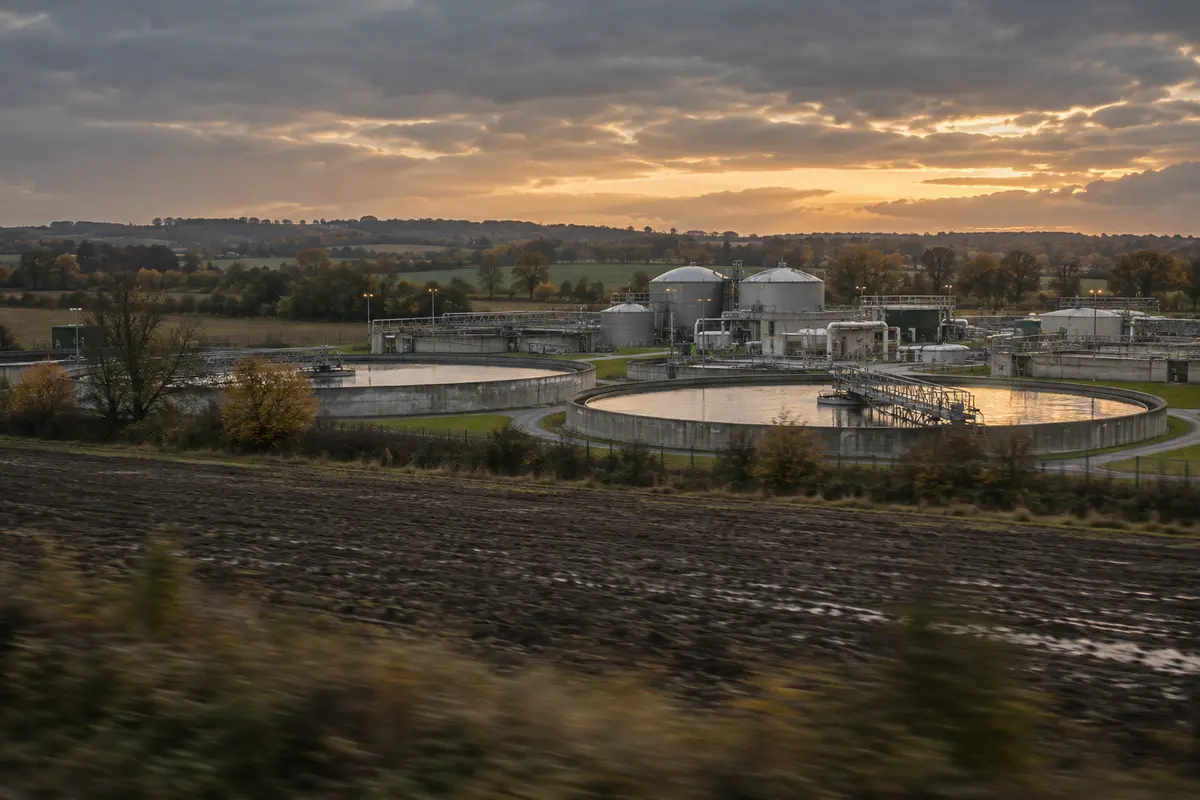
Wastewater treatment separates solids from water. Treated solids may become biosolids used as a soil amendment, returning nutrients and organic matter to land. That beneficial use does not mean every constituent stops moving. PFAS can enter wastewater from many upstream uses and some may remain with solids. The relevant question is not whether every biosolids-amended field is contaminated in the same way. It is what particular compounds do under particular conditions after application.
02 · FOLLOW THE MECHANISM
Aging changed the timing
USGS-affiliated researchers compared fresh and field-aged biosolids in controlled, anaerobic water–sediment microcosms. Aging initially delayed the release of several long-chain PFAS. After day 136, releases from aged material approached those from fresh material for those compounds. The experiment isolates a mechanism at a water–sediment interface. It does not reproduce a whole field, measure a drinking-water dose or estimate a resident’s health risk.
03 · KEEP THE CLAIM BOUNDED
One measured compound can become another
The researchers also observed final masses of selected perfluorocarboxylic acids above their initial masses, consistent with transformation from precursor substances during the experiment. That is why disappearance from one analytical column need not mean the larger PFAS question disappeared. Monitoring must decide which compounds and precursors to measure, over what period, and along which actual route. Field-scale exposure still requires application history, hydrology and sampling.
THE EVIDENCE ABOARD
Follow the source.
THE STORY CONTINUES · PASSENGER
The public finding opens the question. The deeper Track tests its limits.
Continue into the study design, system relationships, practical questions and the evidence still missing.
Continue the Passenger investigation →THE ORANGE · FOLLOW THE QUESTION
Ask where it goes next.
The Orange now recognizes this investigation’s vocabulary and routes the question back to reviewed reporting.
Ask The Orange →